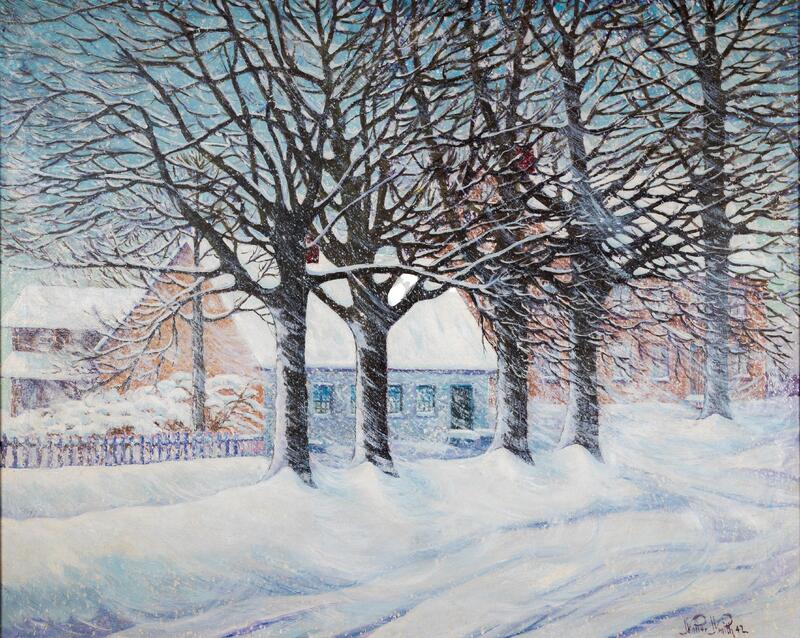
Walter Washington Smith was an artist who often painted religious scenes and created city signs and posters from Clearfield, PA. However, "April Blizzard" indicates Smith's variability as it depicts a residential neighborhood during a blizzard. The sidewalk, open and empty street, and a house behind four barren trees are covered in blowing snow.
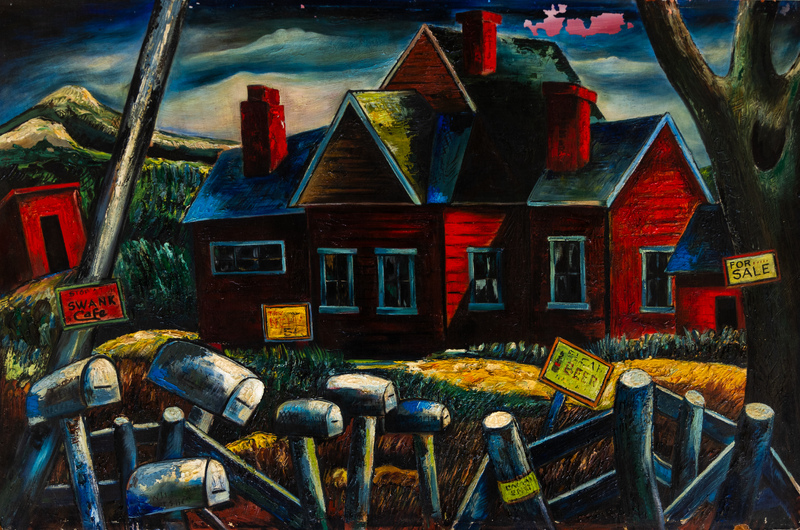
John Howard was an artist from Alcorn, MS. "Arkansas Landscape" shows a red house with a wooden gate, five posted signs, and six mailboxes in the foreground. The house is surrounded by dark green grass, leading to a mountaintop in the background. A sign pinned to a tree reads “For Sale” along with other titled signs throughout the landscape.
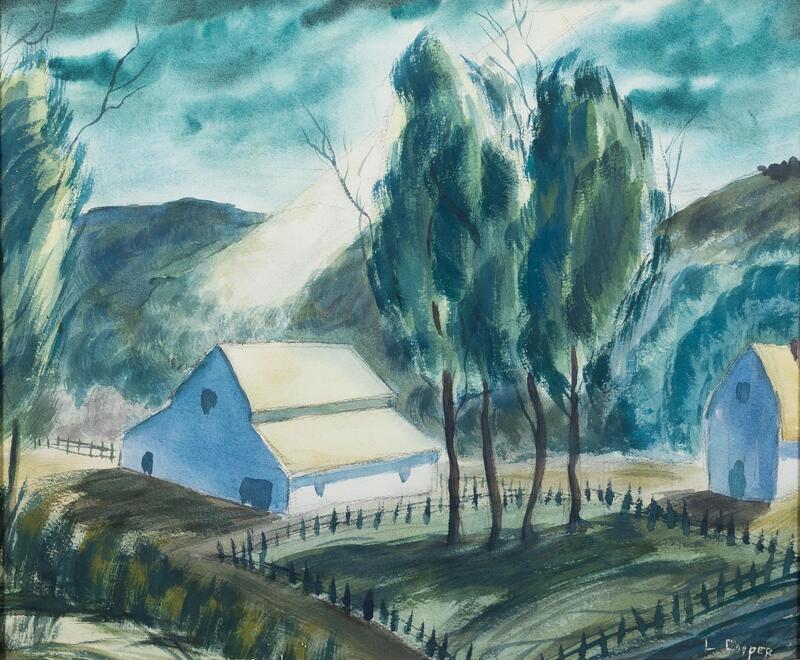
Leonard Cooper was a painter, musician, and piano teacher from Salinas, CA. "Before the Rains Came" illustrates a rural landscape prior to a rainstorm. It depicts two barns, a thicket of trees, a fenced area, and rolling hills under a dark cloudy sky.
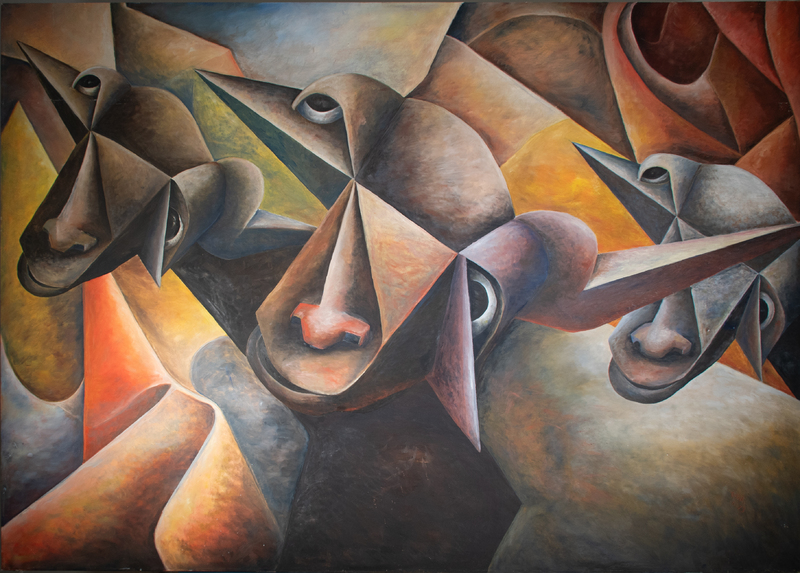
This abstract work features three distorted cows’ faces that seem to be staring upwards and at the viewer, against a colorful triangular background. Vital was an art student at Texas Southern and later went on to become a faculty member in the art department. Many works in the school’s collection, particularly from the 1970s, use cubist styles.
Burley’s vibrant mural explores cycles of life and focuses on women. The left conveys night and includes a female constellation. The right shows daytime, with plants and animals. A rainbow runs across, signifying unity. The large, detailed hand is a frequent motif in the art of Biggers’ students.
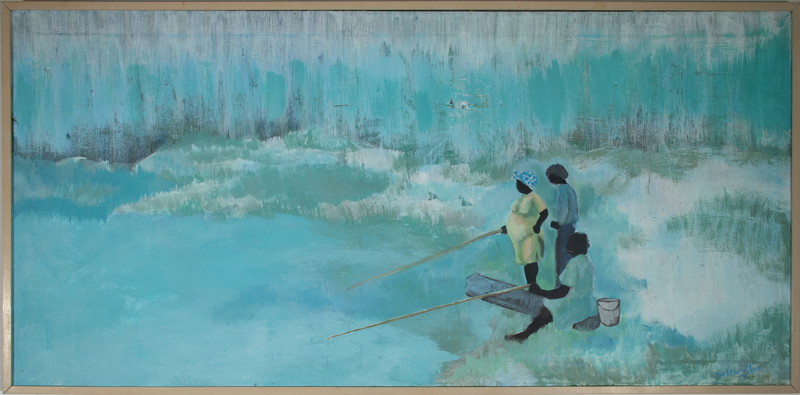
This painting by Charlene Claye shows a group of three people, including at least two women, fishing by a pond. This painting highlights one of the many types of labor Black women perform to support their families and communities. The broad, blue strokes extend a sense of timelessness and depth.
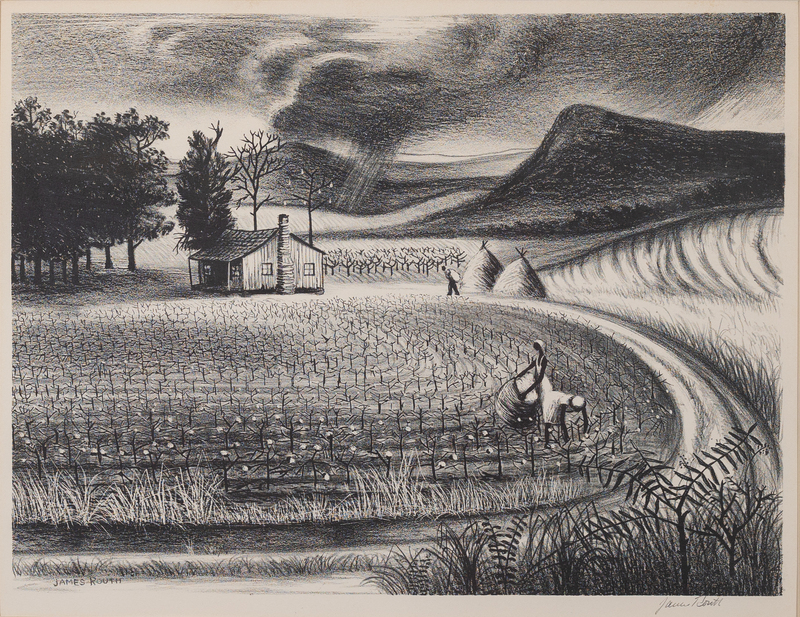
James Routh, Jr. is a painting and printmaker from Atlanta, GA, by way of New Orleans, LA. "Blue Ridge Farm" depicts a rural landscape in the Blue Ridge Mountains, an Appalachian range that extends from Georgia to Pennsylvania. The background shows an atmospheric perspective of two mountains and rain clouds. In the foreground, two women dressed in white are picking cotton while a man behind them carries cotton on his back.
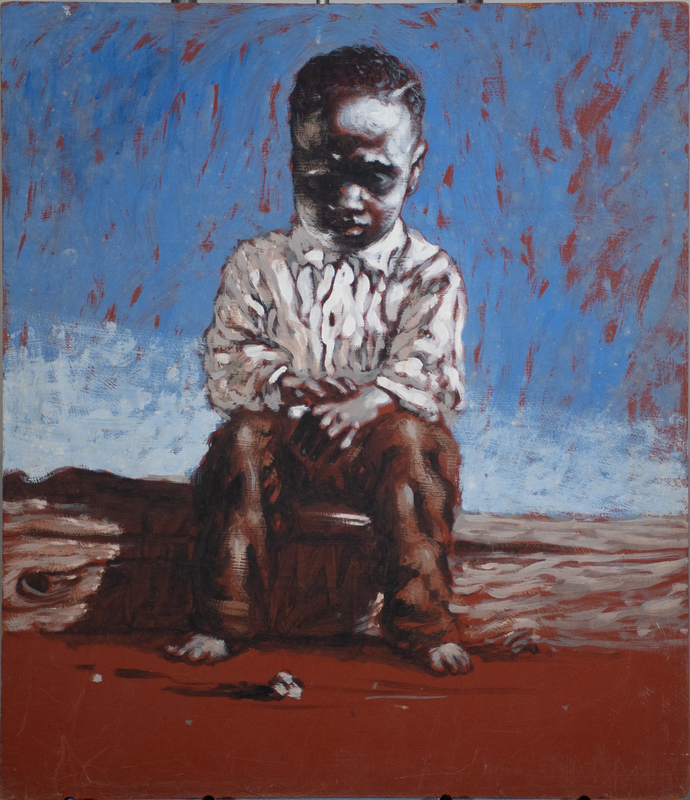
Oliver’s painting depicts a young boy sitting on the stump of a tree. The boy is barefoot and wearing a contemplative expression on his face. Oliver’s style in this painting is very free-form, with quick and abrupt brushstrokes throughout the composition. Oliver is one of the most successful art graduates from TSU, going on to be the only North American artist to design scarves for the fashion house Hermes.
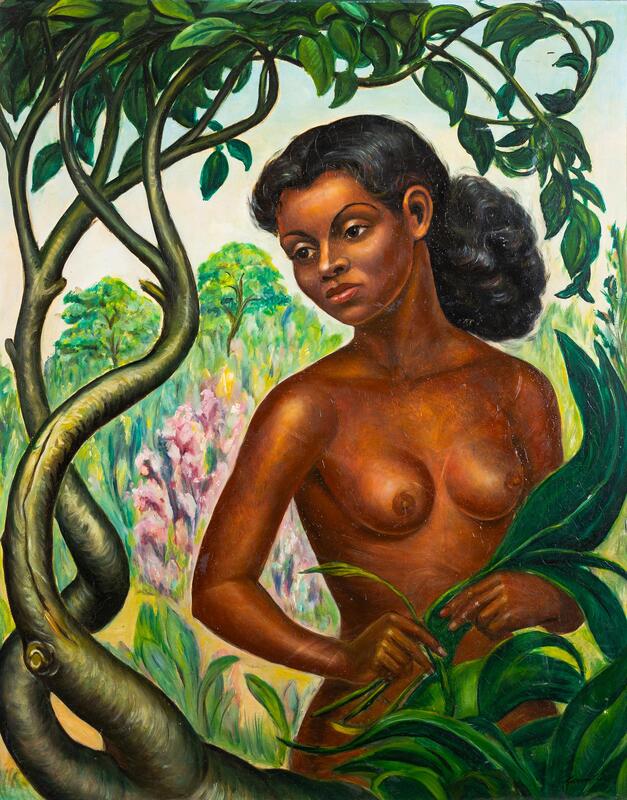
Samuel Albert Countee was a New Negro movement painter and sculptor from Marshall, TX. "Brown Girl" depicts a nude Black woman in nature. She has a thoughtful expression as she touches the branches that obscure her groin. In the background is a garden scene of pink flowers and lush trees.
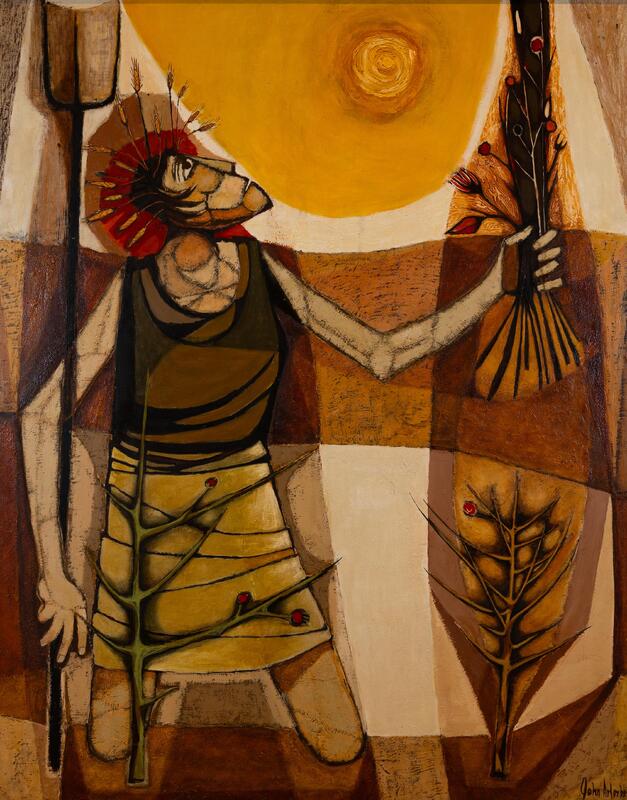
John Arterberry was an artist who worked in the art department at Langston University from Tallahassee, FL. "Ceres" depicts the Roman goddess of agriculture, grain crops, and fertility, looking toward the sun. Ceres wears a crown of wheat stalks and holds a pitchfork in one hand and a bouquet of poppies in the other.
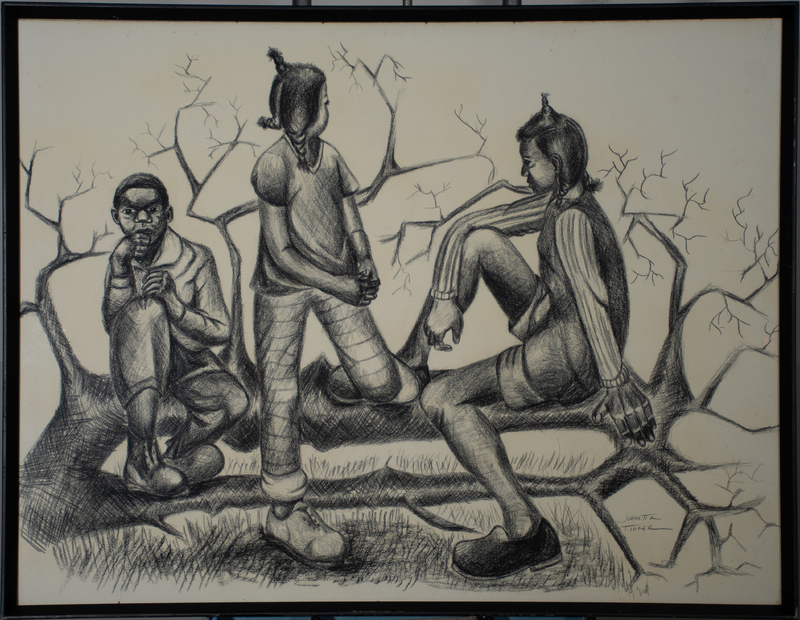
Tinker’s drawing shows three children lounging around a fallen tree. The two girls are depicted with elongated limbs, and the rightmost girl also has oversized hands. Dr. Biggers influenced his students to draw the hands and feet of their subjects in great detail and disproportionately large. This style continues to be taught to and implemented in the works of TSU artists in the 21st century.
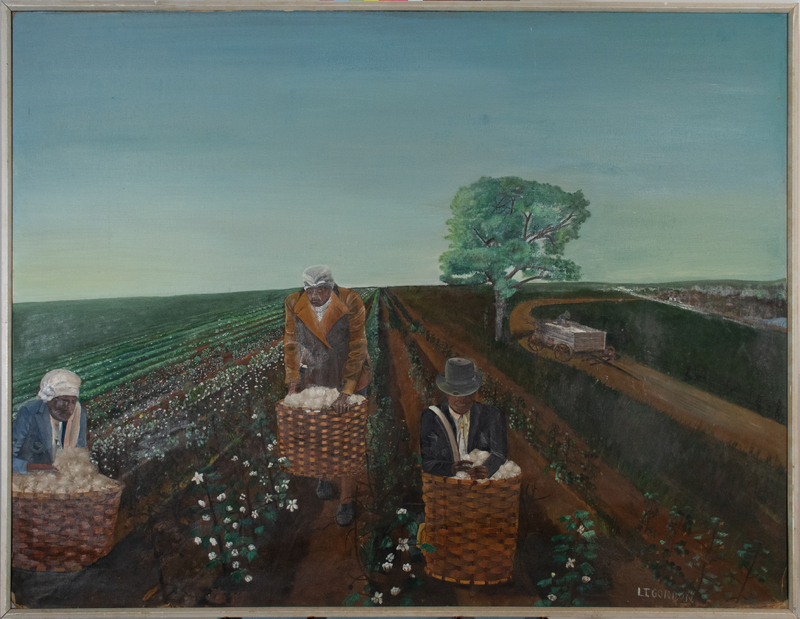
Gordon's painting reflects the work life of cotton harvesters. The three pictured laborers are older and formally dressed as they pick cotton bolls and carry baskets. Many of the cotton plants are shown with white flowers, an early stage in the plant’s development. This suggests Gordon may be familiar with the process of cotton farming and harvesting.
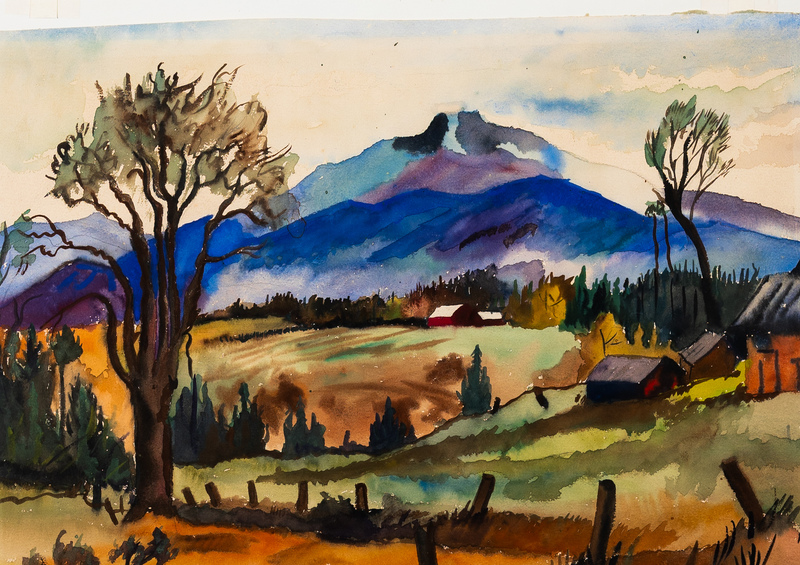
Lewis E. Stephens was an artist and photographer from Hamden, CT. "Country" is a rural landscape painting depicting a residential area beneath a mountain range. In the foreground is an open landscape with a vegetation between residential farms. In the background, Stephens uses cool hues to illustrate the mountains.
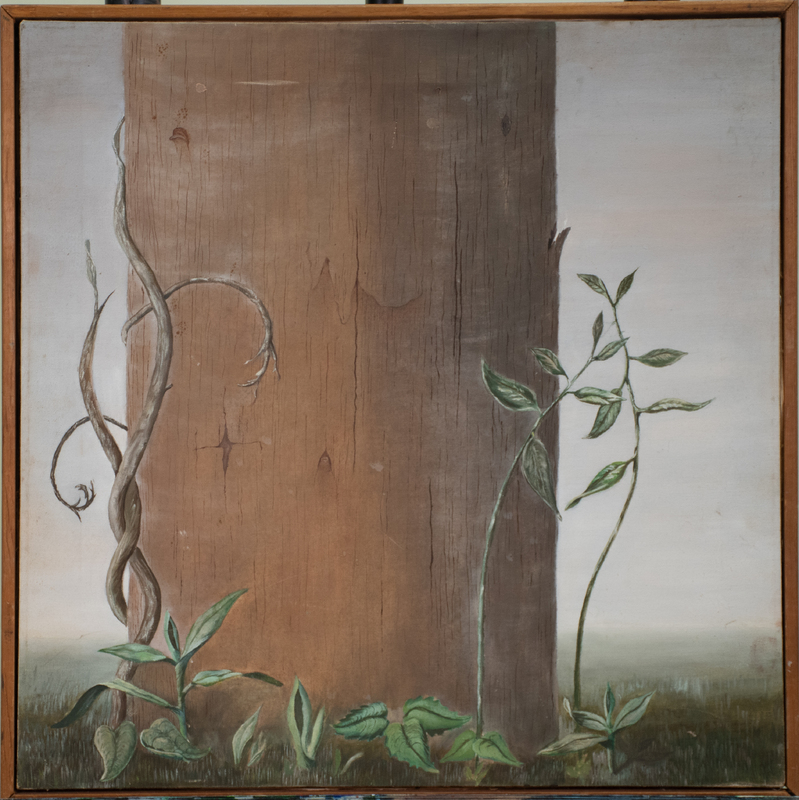
This painting, created by an unknown TSU art student, depicts the base of a tree or wooden telephone pole, with various smaller plants and vines creeping up its structure. Dr. John T. Biggers encouraged students to study the natural world and seek inspiration from it. He instructed students to sit outside for an extended period of time and observe.
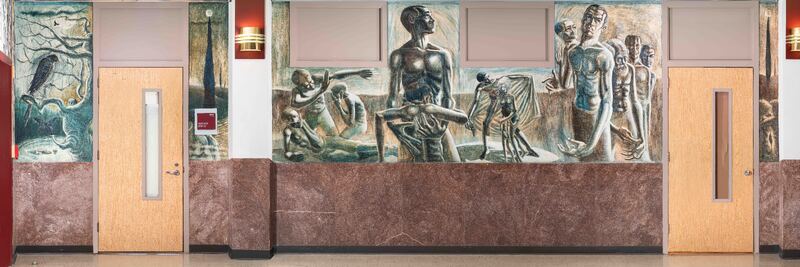
This is a universal scene of the despair and struggle facing a group determined to survive. The lone tree in the moonlight starkly symbolizes the darkness surrounding the scene (center left panel), while the tree rising from a swamp (leftmost panel) suggests hope with the bird, butterfly, and waterlily indicating transformative beauty.
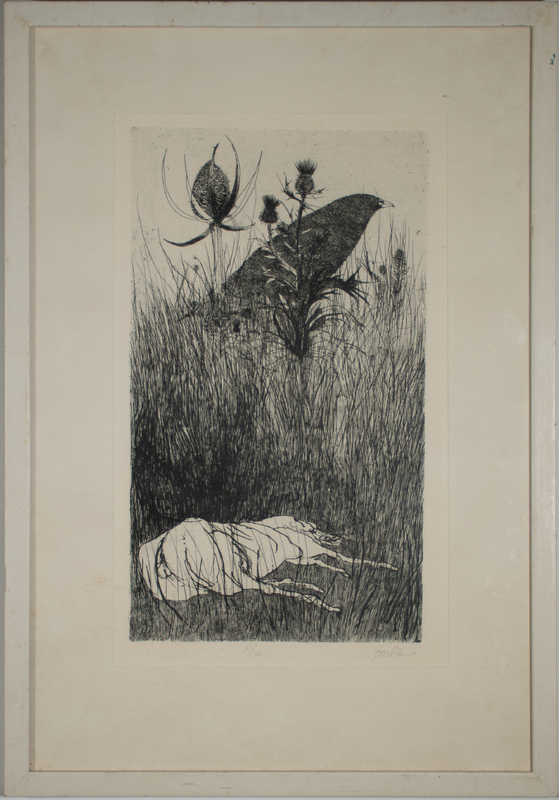
This etching by American artist Leonard Baskin shows a dog dozing in a meadow. A crow rests on a plant above the dog. Unlike most works held by the University Museum, the artist is not an alumnus of Texas Southern, nor tied to the university in any way. Instead, this piece was donated to the museum by a benefactor.
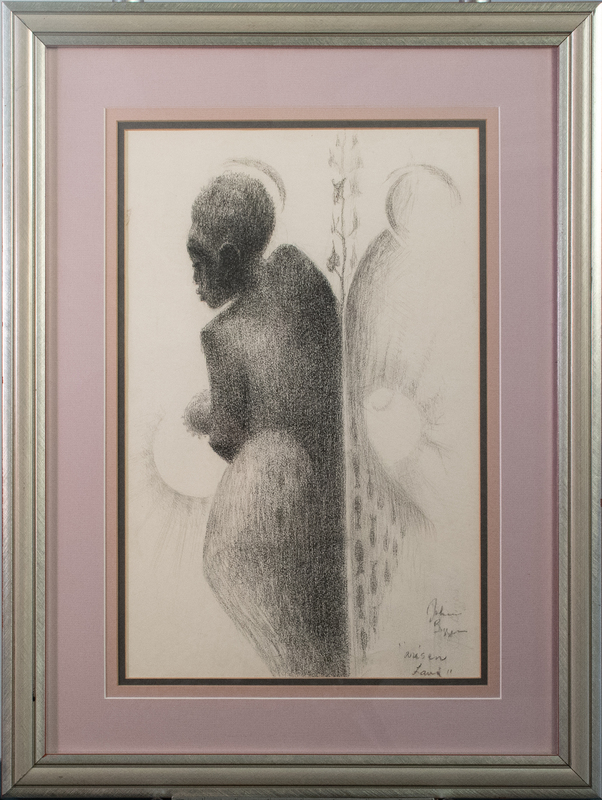
Biggers’ drawing shows a woman and her reflection. The woman, positioned on the left side of the composition, looks slightly back over her left shoulder, while the sun creeps out from around her midsection. The woman is cradling a baby in her arms. Her reflection is drawn loosely with minimal details, and the two are separated by a line of plant and fish shapes.
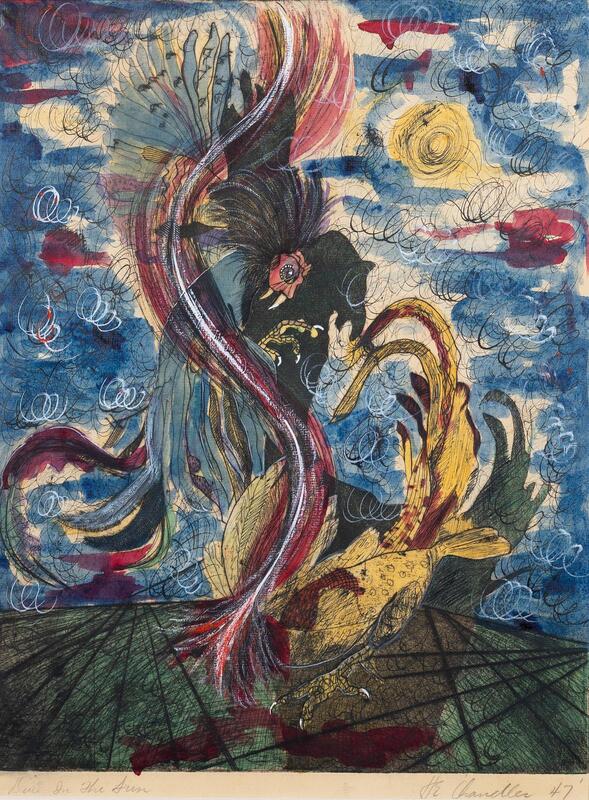
Houston Chandler was a sculptor, printmaker, painter, and teacher from Saint Louis, MO. "Duel in the Sun" is a print artwork of an avian battle on an abstracted landscape. One colorful rooster looks down upon the other it just defeated. The roosters are set on a green field against a blue sky with a swirling yellow sun.
In this interview, Texas Southern art alumnus Earl Jones, Jr. discusses his experience as a student who graduated in 1996. During his first period of study at TSU, Jones painted a mural reflecting on environmentalism and racism—these themes continue into his current works. Nowadays, Jones primarily creates intricate wood carvings.
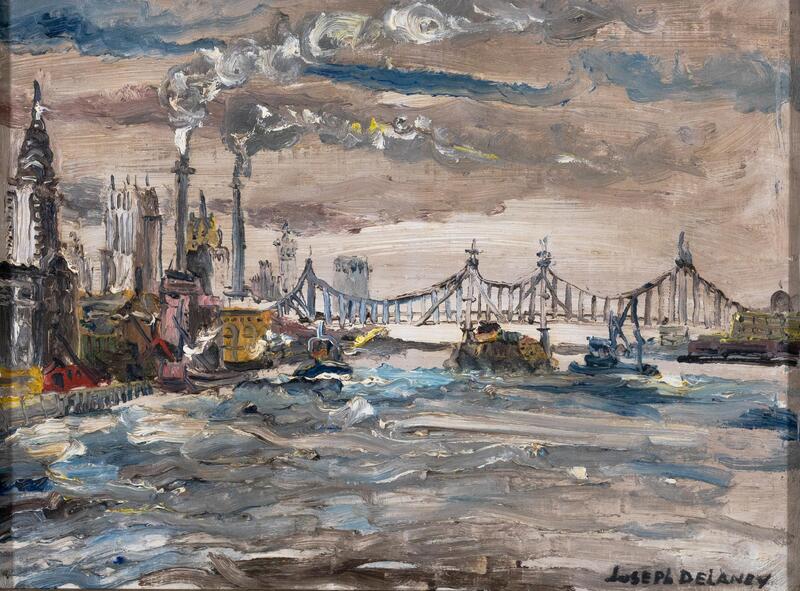
Joseph Delaney, younger brother of Beauford Delaney, was a Harlem Renaissance artist from Knoxville, TN. "East River" depicts the waterway that separates Queens from Manhattan in New York City. The impasto piece shows Queens and several boats by the Queensboro bridge with Manhattan in the distance.
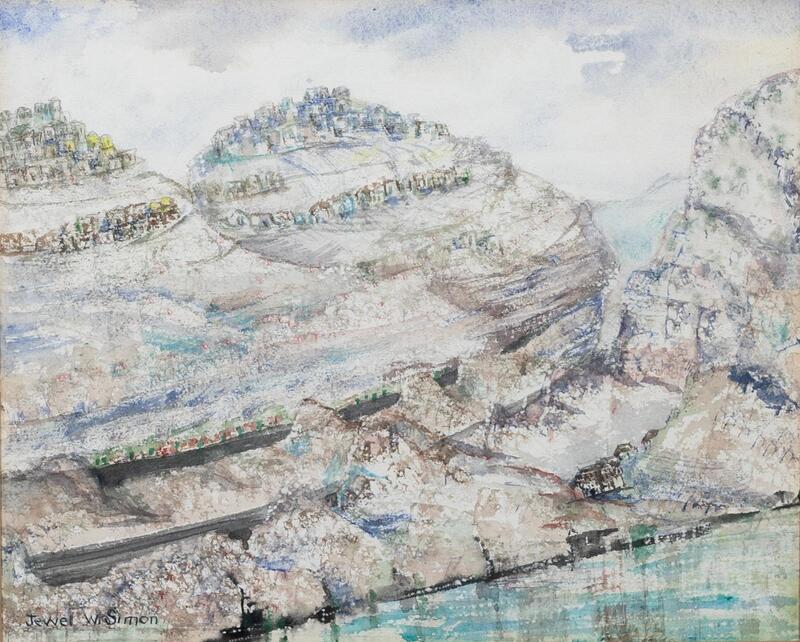
Jewell Woodard Simon was an internationally acclaimed artist, teacher, and poet from Houston, TX. "Ensenada Passage" illustrates a mountainous path to Ensenada, Mexico. A bridge leading to the city is in the foreground, roads lay in the middle ground, and the mountains build up towards the sky, creating an atmospheric perspective.
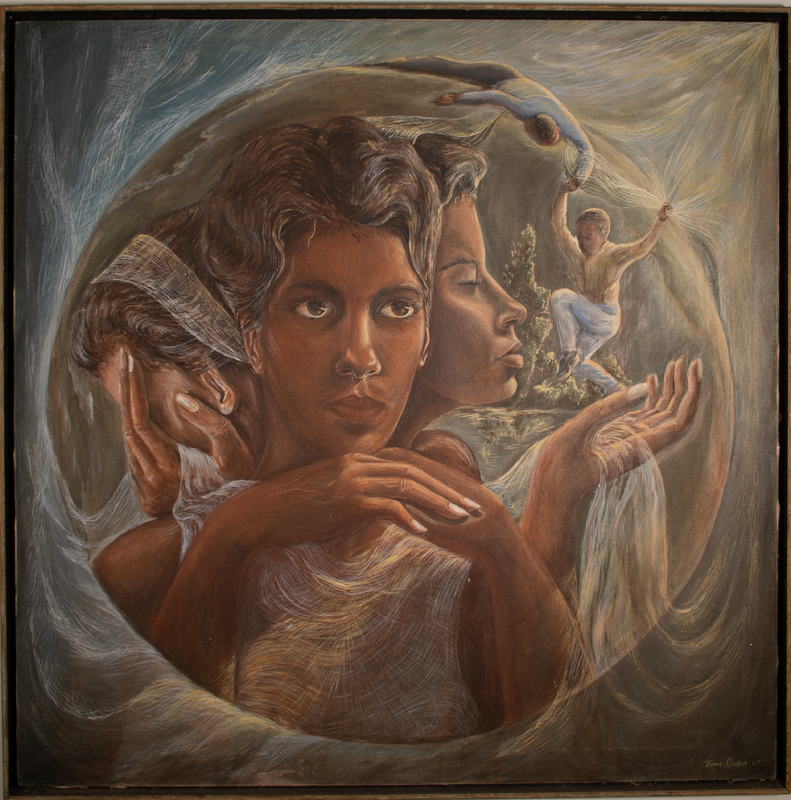
Erma Gordon's self-portrait shows the artist from three different angles. The three profiles are tied together by a light, almost translucent fabric that is worn by the frontmost figure and held by the others. This motif is used repeatedly by the artist, including in her mural. Two boys move fluidly and playfully through the background.
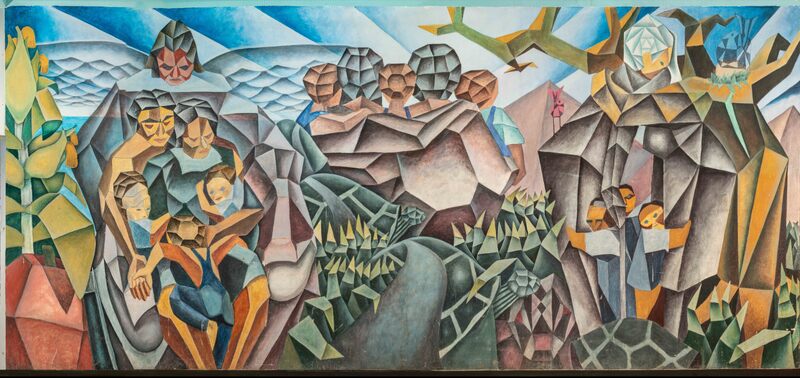
Sifuentes shows multiple generations of a family, painted in a geometric style. Sifuentes borrows visual symbols from his teacher, Dr. Biggers, including the tortoise (longevity) and the serpent (danger and rebirth). Guardian ancestors are represented by figures with angel wings.
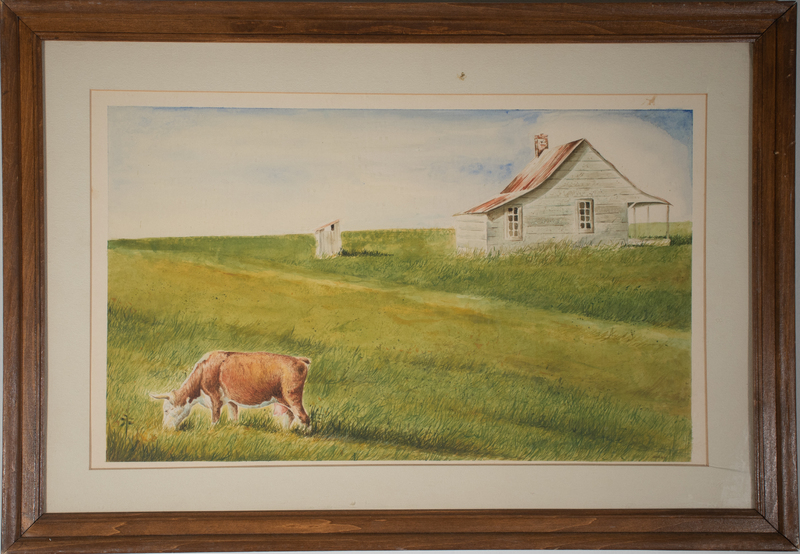
This watercolor painting by Joseph A. Moran features a grazing cow in the foreground and an outhouse and farmhouse in the background. Dr. Biggers encouraged students to create based on what they saw, which may have been this rural scene for this artist.
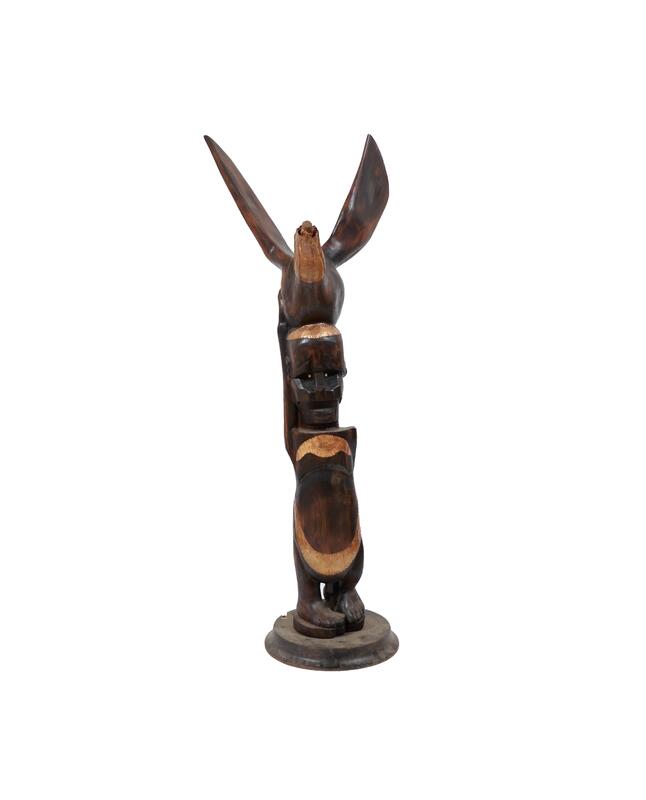
Edward L. Pryce was a landscape architect and artist from Lake Charles, LA. "Fisherman with Cormorant" is a medium-sized carving of a man fishing with a cormorant, a species of aquatic bird, on his head.
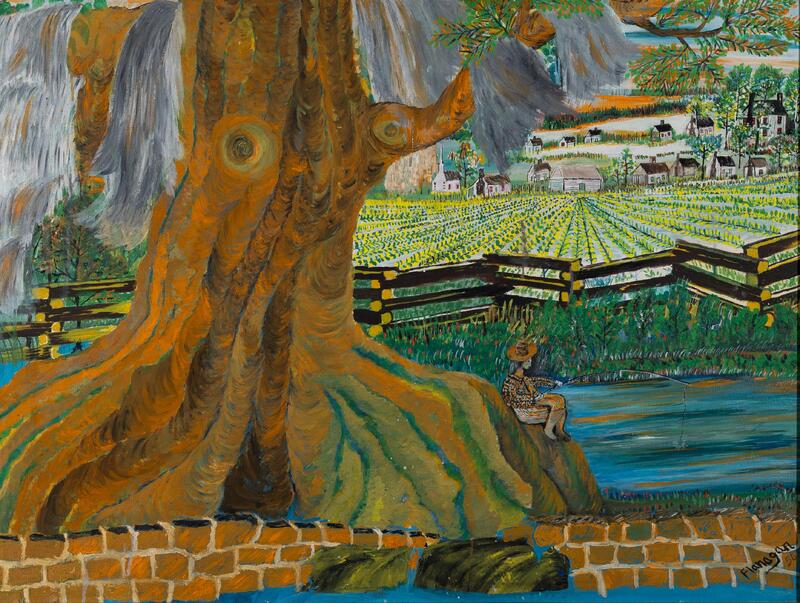
Thomas Jefferson Flanagan was an artist and activist from Florence, GA. "Fishing on the Quarters" is a landscape painting with a large tree and a person fishing from a body of water. The tree and fisherman are in the foreground, while a wooden gate borders an acreage of colorful crops painted linearly.
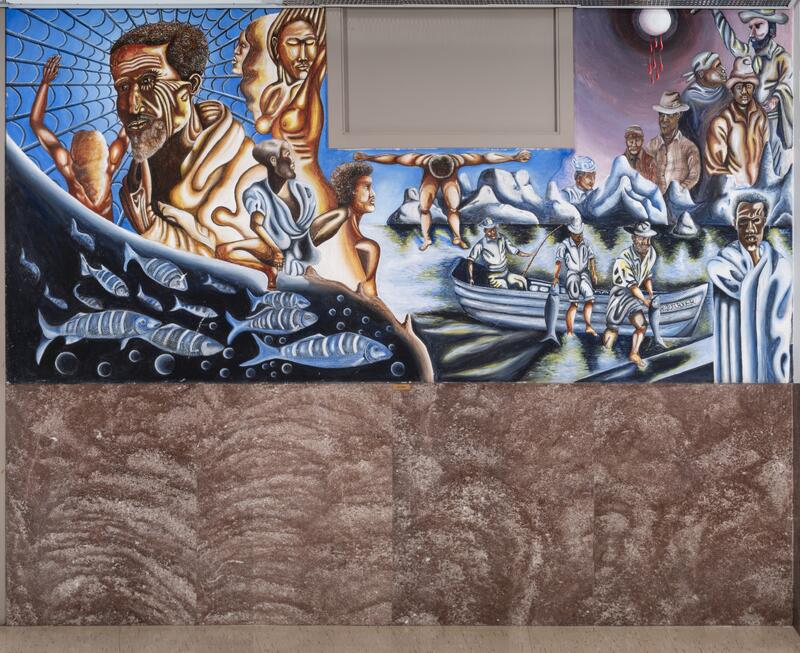
The mural shows fishing life along the water. In the middle and on the right, a man is doubled over from his burden, while a group of fishermen brings their catch to shore. On the left, an elderly man and other figures suggest the trials and challenges of the ancestors.
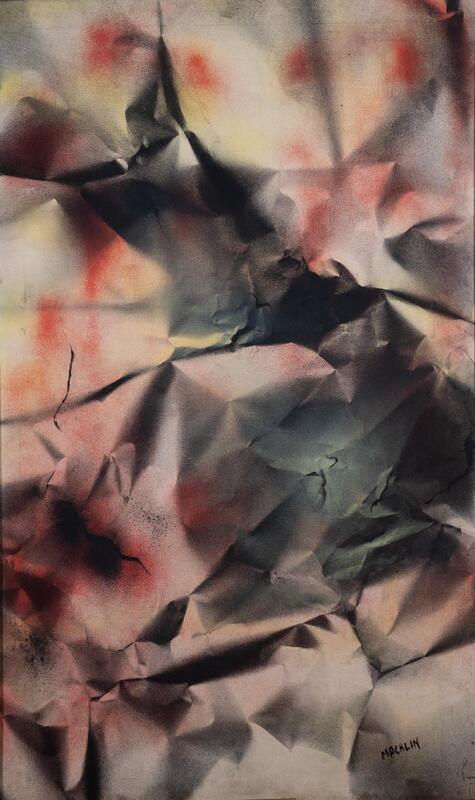
Anderson D. Macklin was an artist, professor, art historian, and author from Luther, OK. "Flowers and Paper Magnified" is an abstract view of its namesake. Macklin uses muted pastels and charcoal shadows to create a magnified perspective of the objects.
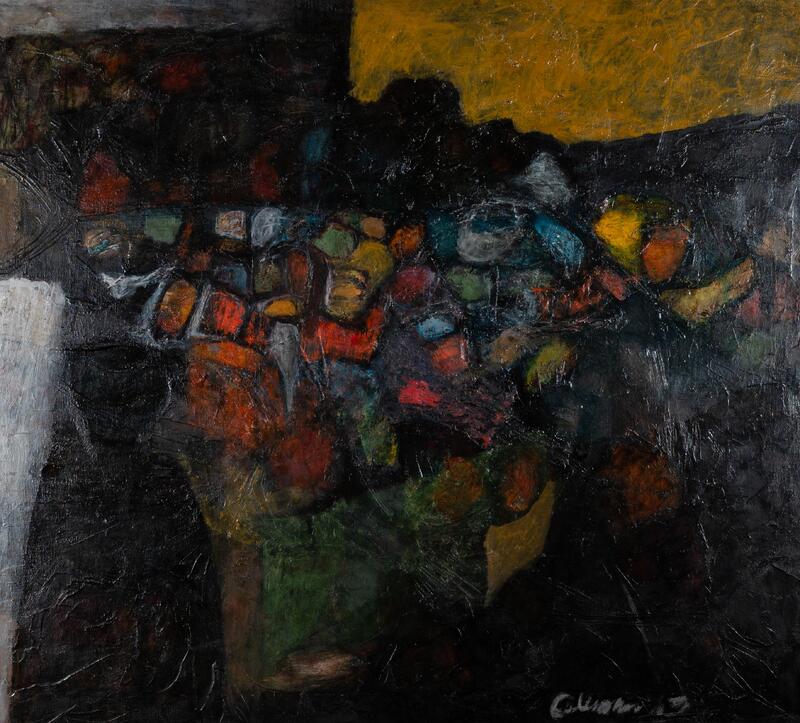
Floyd Coleman was an art historian, educator, and painter in Washington, D.C. "Garden" is an abstract depiction of a patch of land used to grow flowers and vegetables. Coleman uses splotches of vibrant colors on top of a black background.
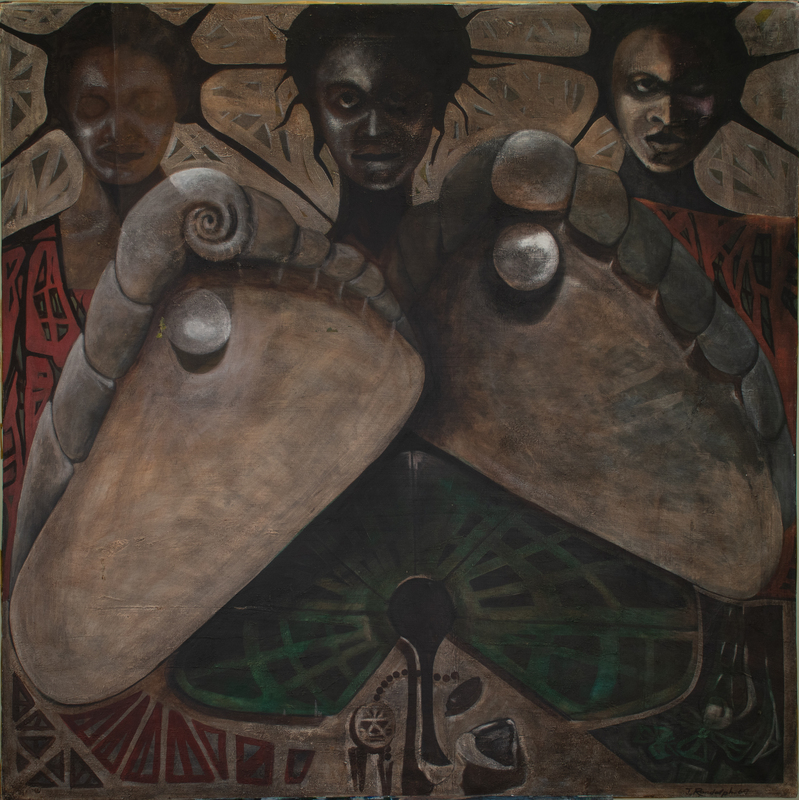
Randolph’s painting shows giant pearls, embedded in oversized shells, in front of a group of three Black women. The pearls reference the beauty of the women, whose hair extends out from their heads to form a unifying pattern between them. Towards the bottom, a leaf fan implies regalness, while the small mask indicates African heritage.