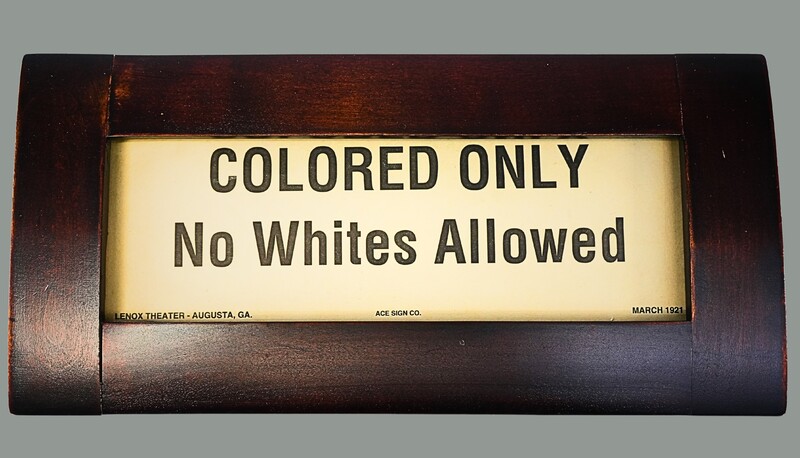
A "colored only" sign was a segregation-era sign typically found in the United States during the Jim Crow era, which enforced racial segregation in public places. These signs were used to designate areas, facilities, or services that were reserved for people of color and donated by Dr. James Eaton.
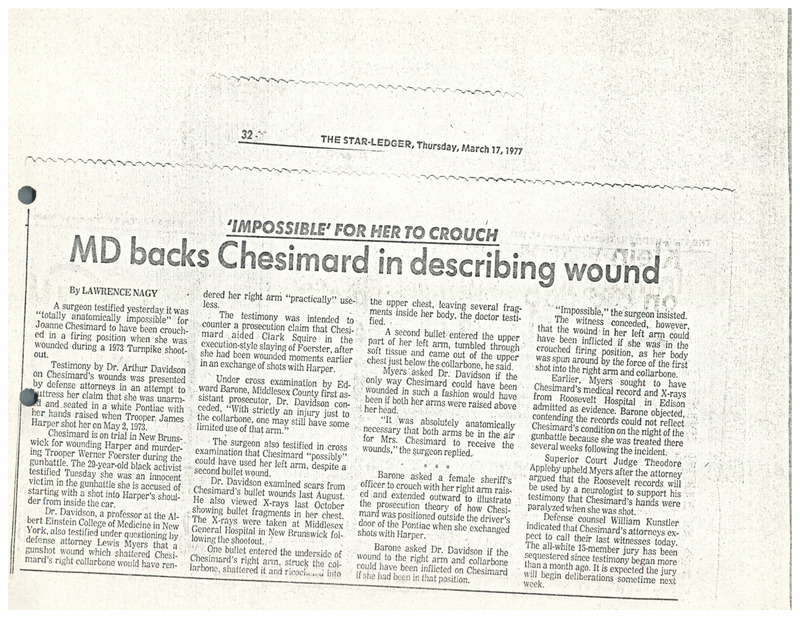
A newspaper article from The Star-Ledger about the testimony of defense witness Dr. Arthur Davidson during the trial of Assata Shakur (JoAnne Chesimard) for the 1973 killing of a state trooper. He testified about the wounds sustained by Shakur and argued that she could not have shot from the crouching position due to her wounds from the shootout.
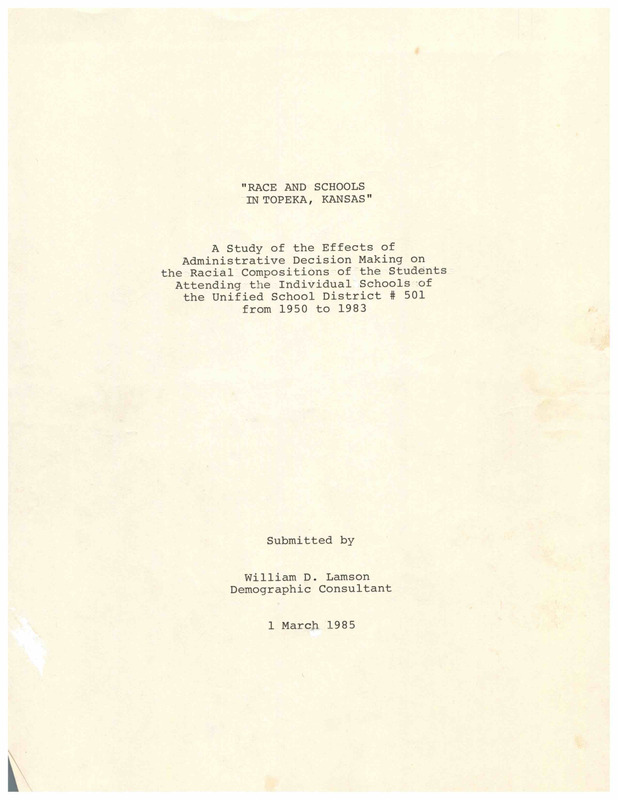
A complete historical breakdown of the effect of administrative decisions on the racial makeup of Topeka schools. Includes full reports on every school in the district as well as analysis on decisions made by the school board and administrators.
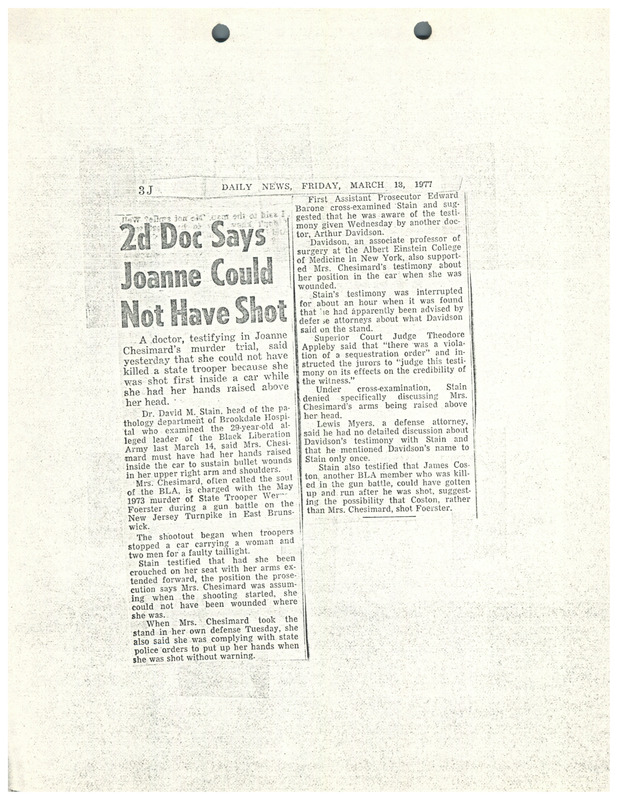
A newspaper article from Daily News about the testimony of defense witness Dr. David Spain during the trial of Assata Shakur (JoAnne Chesimard) for the 1973 killing of a state trooper. He testified about the wounds she sustained, arguing that she couldn’t have shot from a crouching position due to the position of her wounds from the shootout.
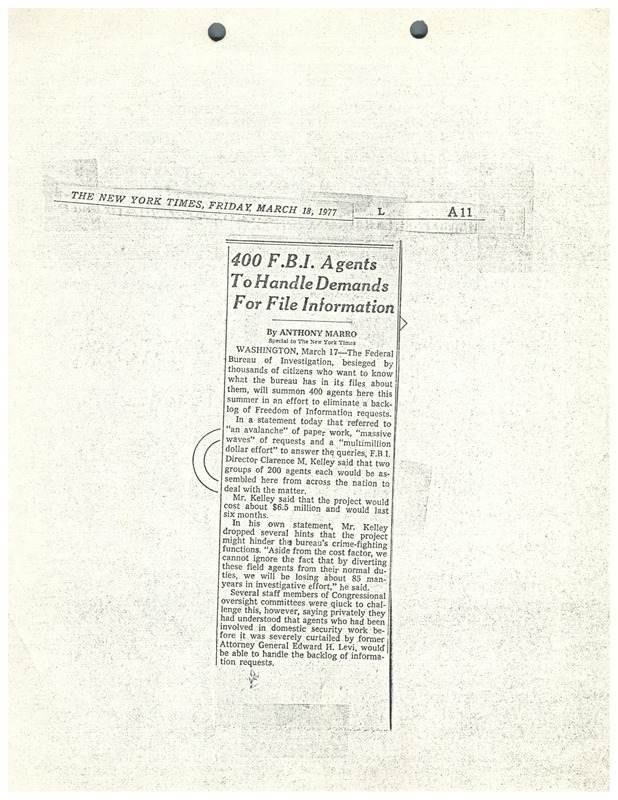
A newspaper article from The New York Times about the FBI assigning 400 agents to help eliminate a backlog of Freedom of Information requests. The agents will have a $6.5 million budget and it will take about 6 months to clear the thousands of requests that the FBI had received, causing the backlog of paperwork.
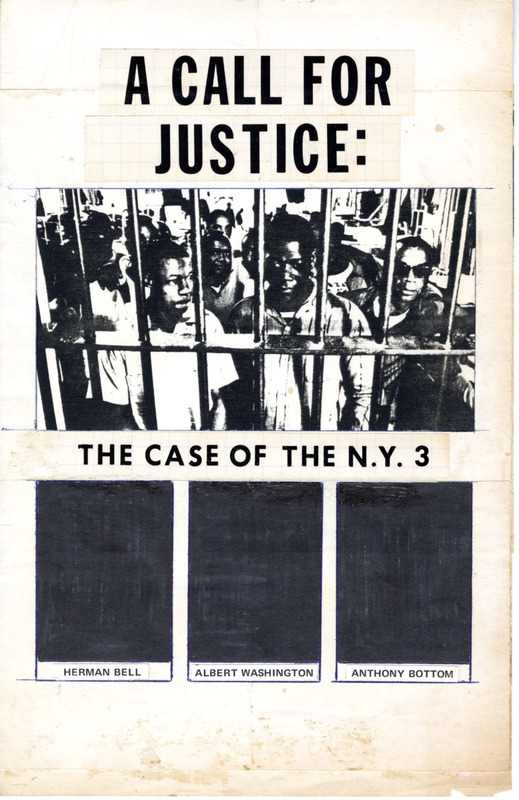
A handmade flier with a picture of prisoners behind bars. The pictures of Herman Bell, Albert Washington, and Anthony Bottom have been blacked out. The three men, known as the New York 3, were Black Panther Party and Black Liberation Army (BLA) members who were arrested and convicted of the May 21, 1971, killing of two police officers in Harlem.
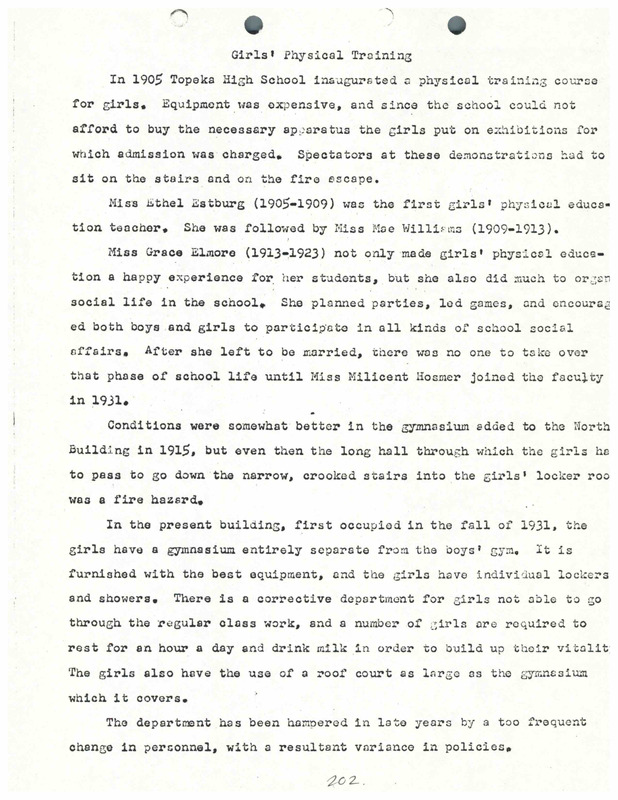
Case Data and Exhibits for Brown III, a relitigation of Brown v. Topeka Board of Education (1954) that corrected resegregation issues caused by open enrollment school choice in 1992. Pages 202-253 of a 1954 centennial history of the Topeka Public School System created by retired teachers of the Topeka Public School System
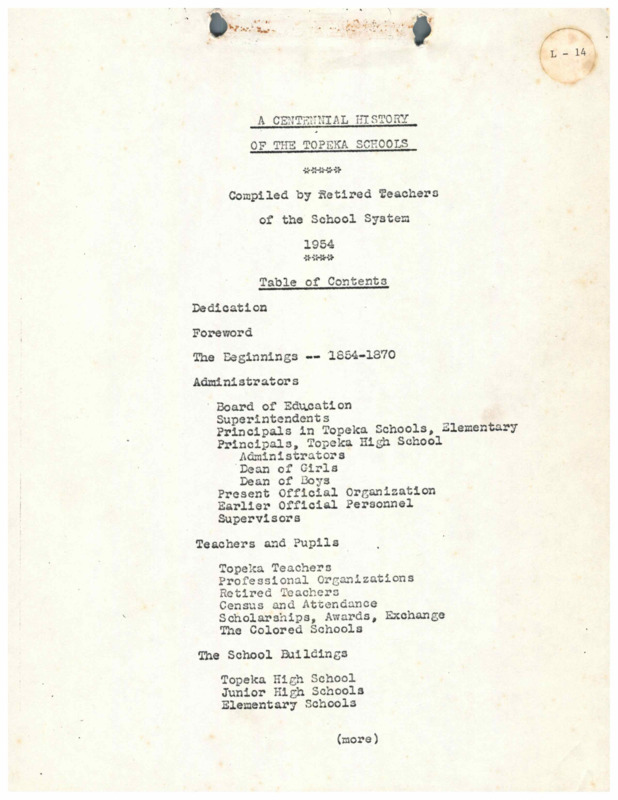
Case Data and Exhibits for Brown III, a relitigation of Brown v. Topeka Board of Education (1954) that corrected resegregation issues caused by open enrollment school choice in 1992. Pages 1-201 of a 1954 centennial history of the Topeka Public School System created by retired teachers of the Topeka Public School System
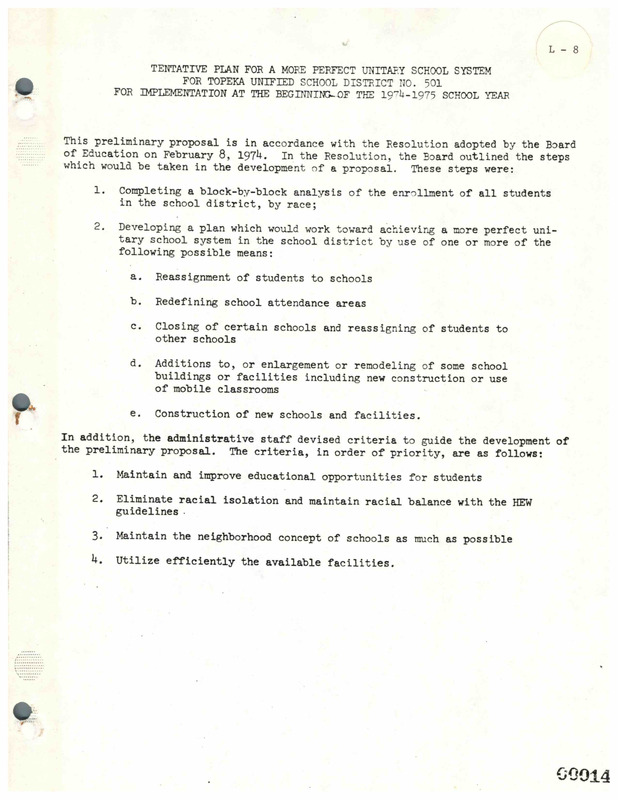
Case Data and Exhibits for Brown III, a relitigation of Brown v. Topeka Board of Education (1954) that corrected resegregation issues caused by open enrollment school choice in 1992. The documents about 1974-1975 school closings and renovations include a tentative plan, a note to parents from the Board of Education, boundary maps, and more.
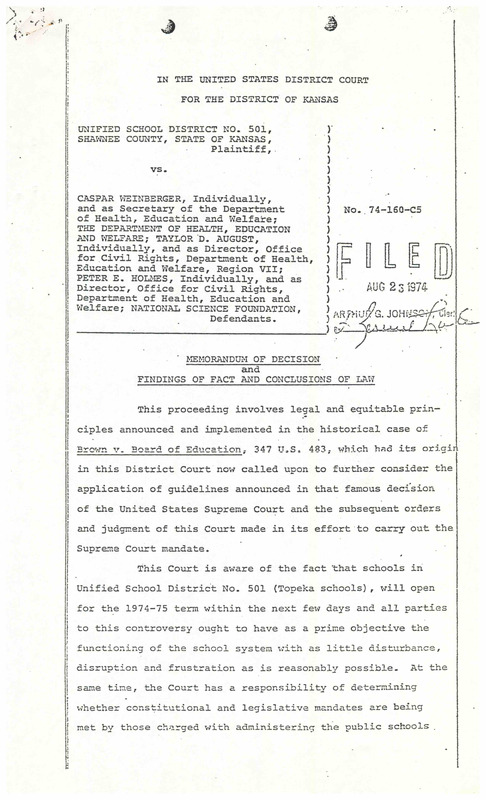
Case Data and Exhibits for Brown III, a relitigation of Brown v. Topeka Board of Education (1954) that corrected resegregation issues caused by open enrollment school choice in 1992. These documents from the Topeka Schools v. Kansas Department of Health, Education, and Welfare case concern compliance with Title VI of the Civil Rights Act of 1964.
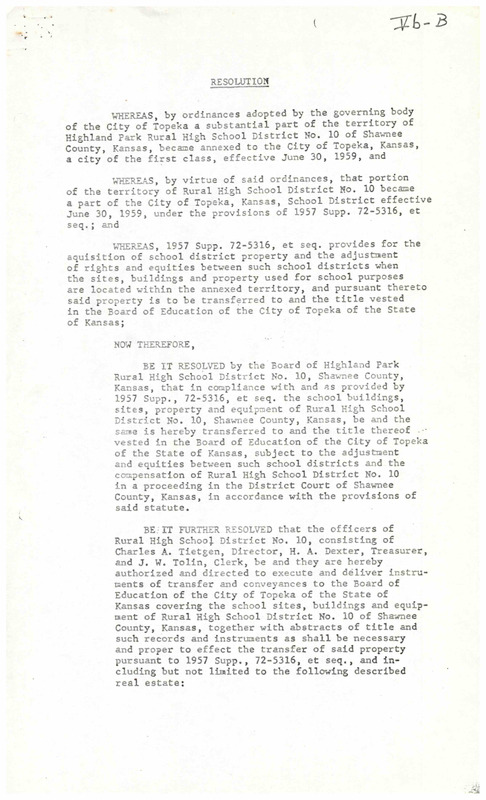
Case Data and Exhibits for Brown III, a relitigation of Brown v. Topeka Board of Education (1954) that corrected resegregation issues caused by open enrollment school choice in 1992. Miscellaneous documents and paperwork pertaining to annexation activities within the Topeka Public School District.
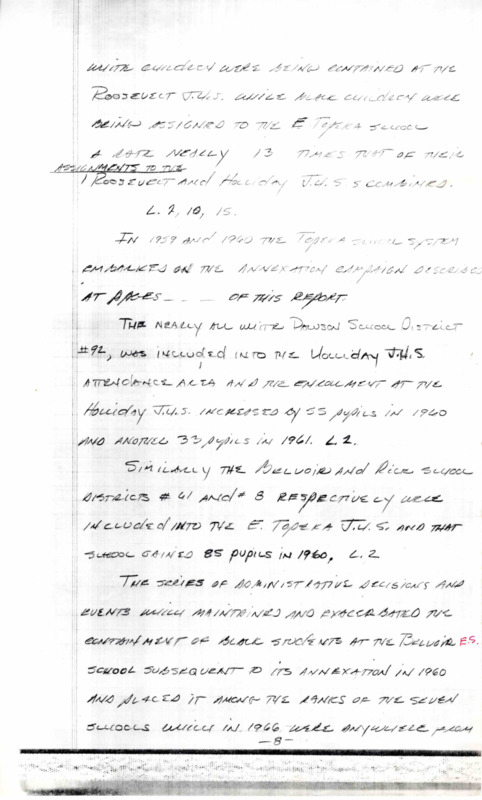
Case Data and Exhibits for Brown III, a relitigation of Brown v. Topeka Board of Education (1954) that corrected resegregation issues caused by open enrollment school choice in 1992. Handwritten analysis and notes and a draft of a report on Topeka Junior High Schools by William Lamson. Some original pages and some photocopied pages.
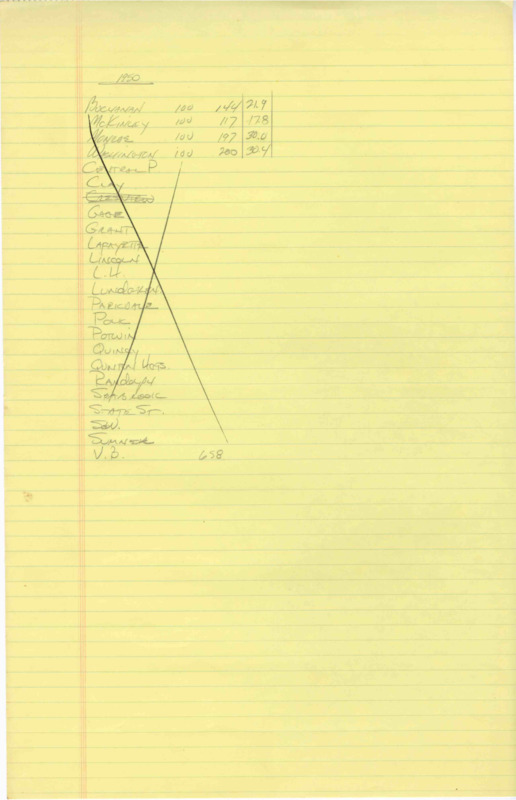
Case Data and Exhibits for Brown III, a relitigation of Brown v. Topeka Board of Education (1954) that corrected resegregation issues caused by open enrollment school choice in 1992. Handwritten analysis and notes by William Lamson, including incomplete drafts of reports using the analyzed data.
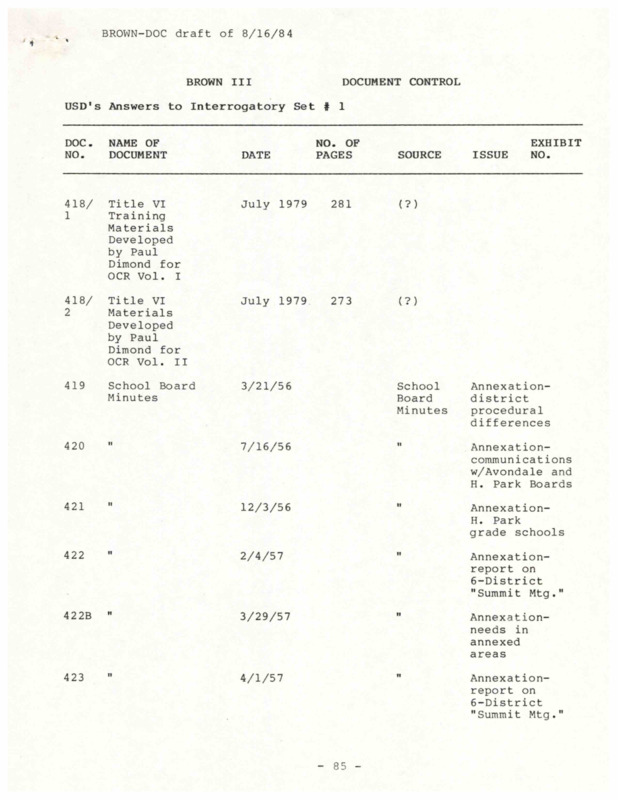
Case Data and Exhibits for Brown III, a relitigation of Brown v. Topeka Board of Education (1954) that corrected resegregation issues caused by open enrollment school choice in 1992. A court document listing documents to be used in the Brown III court proceedings. The list includes the title of the documents as well as the date received.
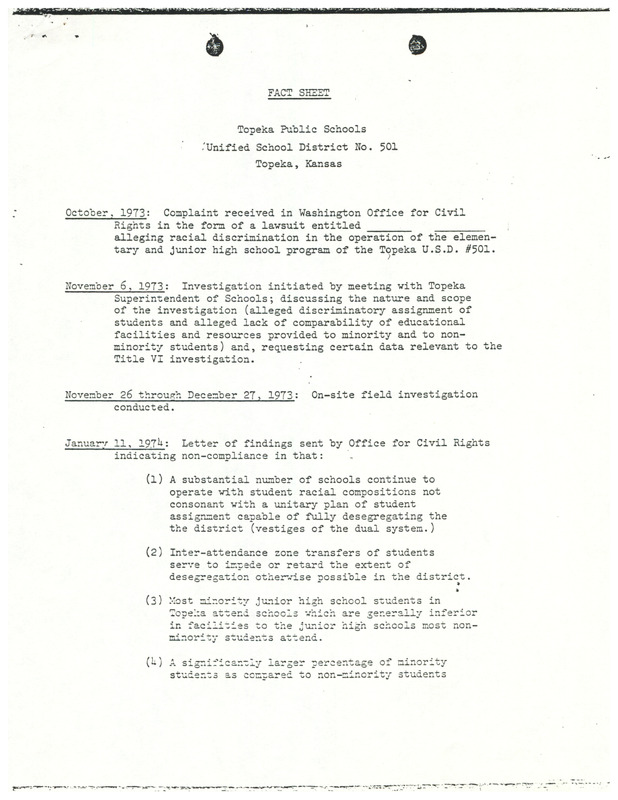
Case Data and Exhibits for Brown III, a relitigation of Brown v. Topeka Board of Education (1954) that corrected resegregation issues caused by open enrollment school choice in 1992. The fact sheet covers key developments in the investigation of Topeka Schools, starting with the notice of investigation through the rejection of a long-term plan.
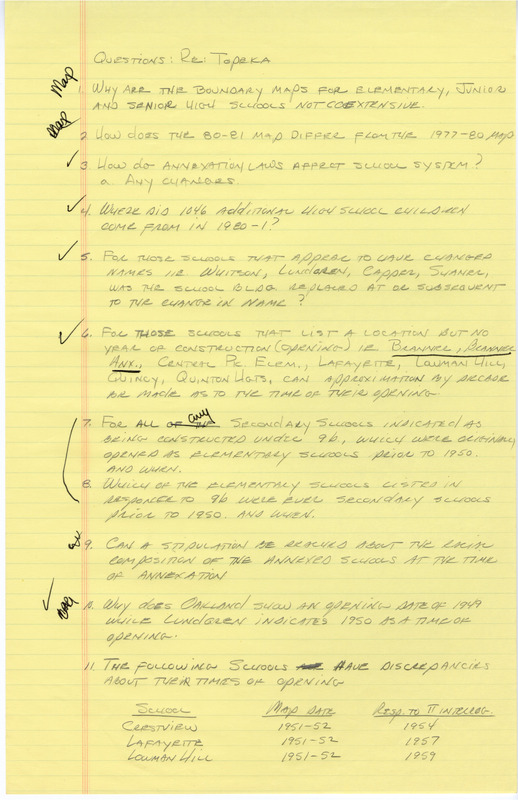
Case Data and Exhibits for Brown III, a relitigation of Brown v. Topeka Board of Education (1954) that corrected resegregation issues caused by open enrollment school choice in 1992. Handwritten notes by William Lamson titled “Questions about Topeka.” Lamson lists 38 questions about Topeka as part of his preparation for the Brown III case.
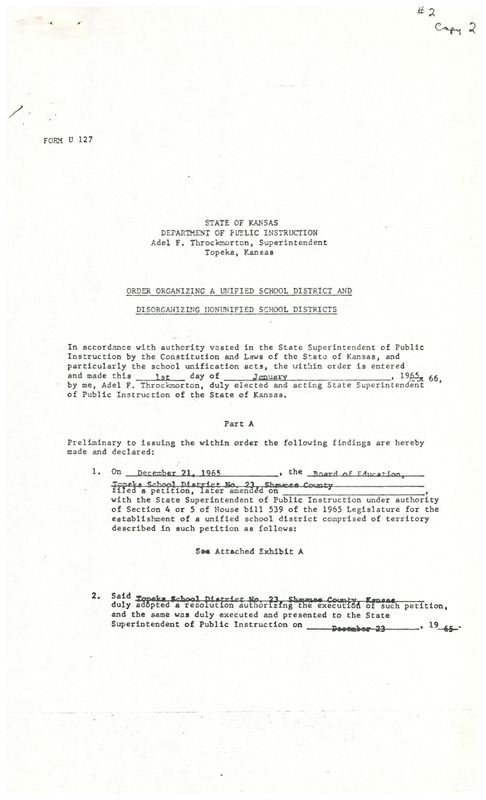
Case Data and Exhibits for Brown III, a relitigation of Brown v. Topeka Board of Education (1954) that corrected resegregation issues caused by open enrollment school choice in 1992. A 1966 order from the Kansas Department of Public Instruction to create a unified school district in Topeka, Kansas, and an administrative structure for the district.
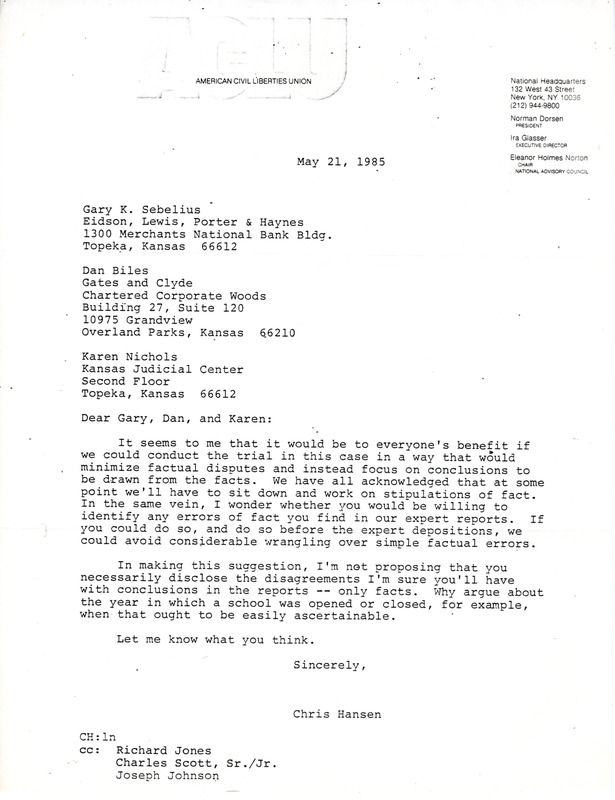
ACLU Attorney Chris Hansen writes to the defendant lawyers to ask for identification of errors they find in reports from their expert witnesses before depositions to avoid spending too much time arguing over simple factual errors. He recommends that the trial focus on conclusions drawn from facts.
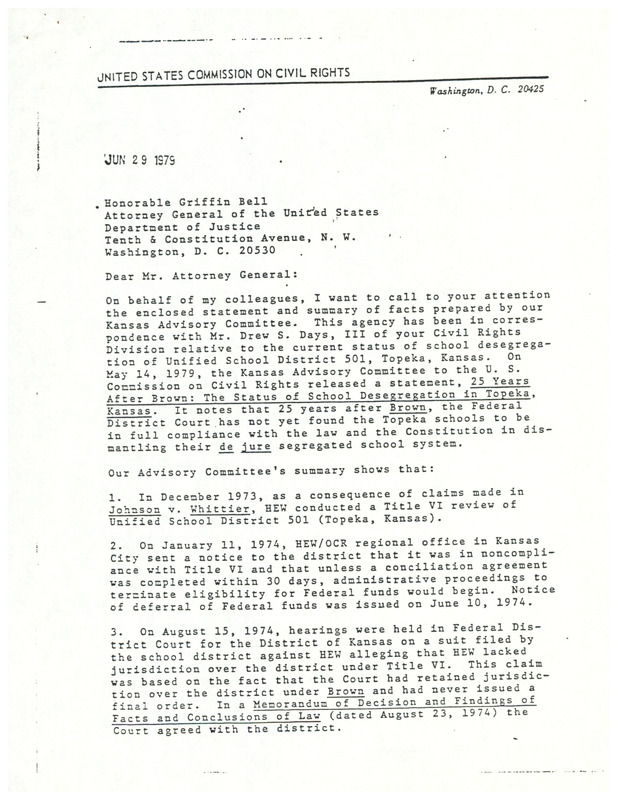
Chairman of the United States Commission on Civil Rights Arthur S. Flemming writes to Attorney General of the United States Department of Justice Griffin Bell to provide him with a statement and summary of facts to the enclosed Kansas Advisory Committee report.
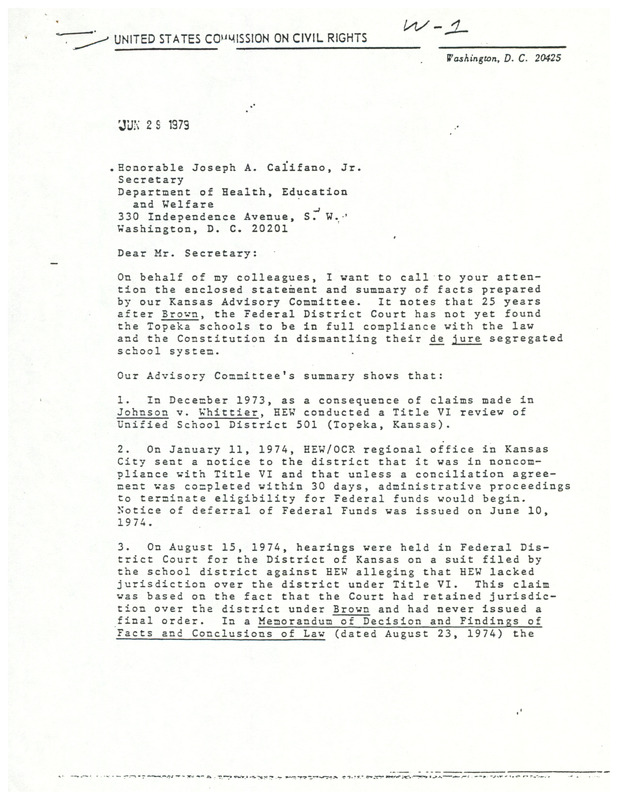
Chairman of the United States Commission on Civil Rights Arthur S. Flemming writes to Secretary of the Department of Health, Education, and Welfare Joseph A. Califano Jr. to provide him with a statement and summary of facts to the enclosed Kansas Advisory Committee report.
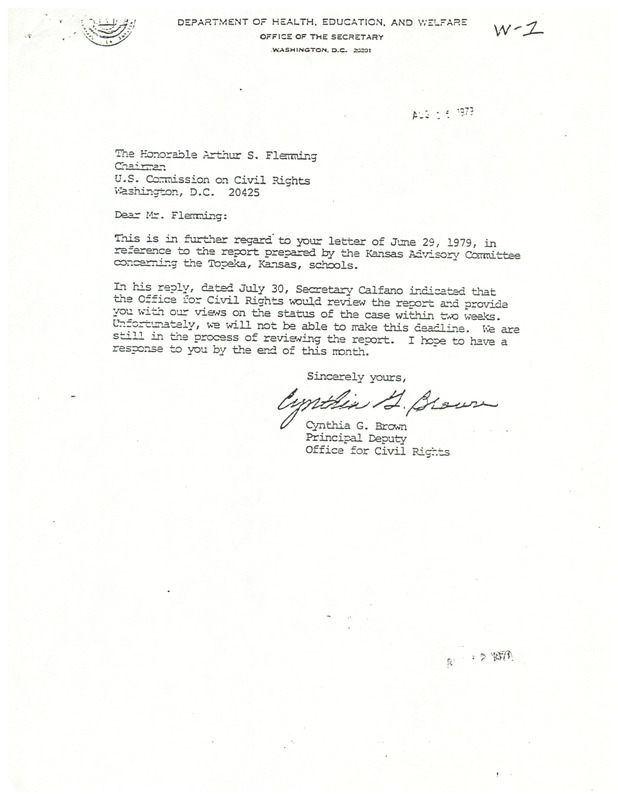
Cynthia G. Brown, Principal Deputy of the Office of Civil Rights in the United States Department of Health, Education, and Welfare, writes to Chairman of the United States Commission on Civil Rights Arthur S. Flemming to alert him that the office is still reviewing his report and hopes to get back to him by the end of the month.
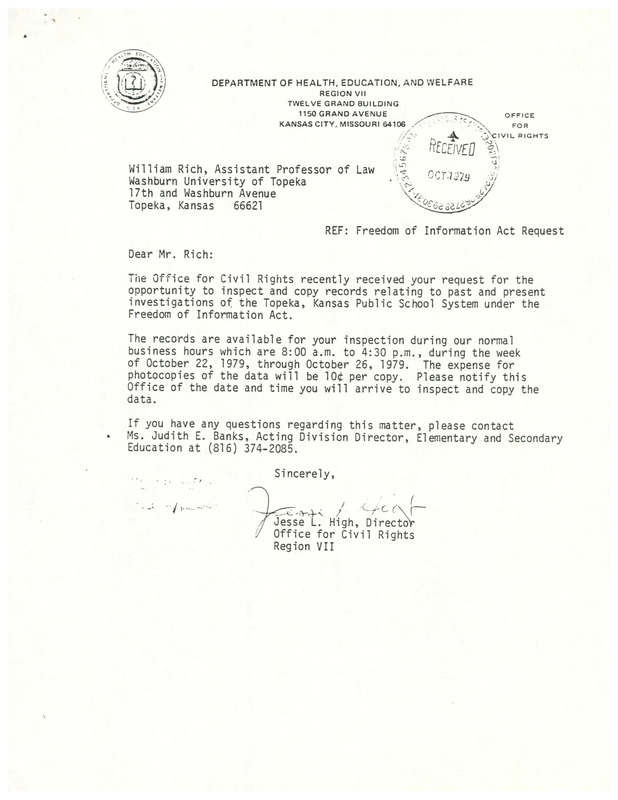
Director of the Office of Civil Rights of the Region VII Department of Health, Education, and Welfare Jesse L. High writes to Assistant Professor of Law at Washburn University of Topeka William Rich to inform him that records pertaining to past and present investigations of Topeka schools will be available for inspection next week.
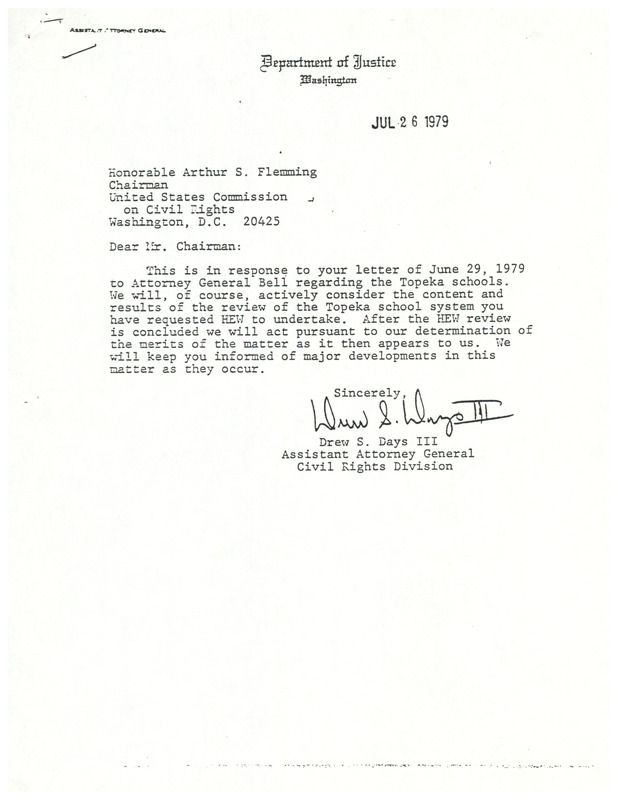
Drew S. Days III, Assistant Attorney General, Civil Rights Division of the U.S. Department of Justice, writes to Chairman of the United States Commission on Civil Rights Arthur S. Flemming to let him know that the Department of Justice is considering his report and any pursuant action it might cause.
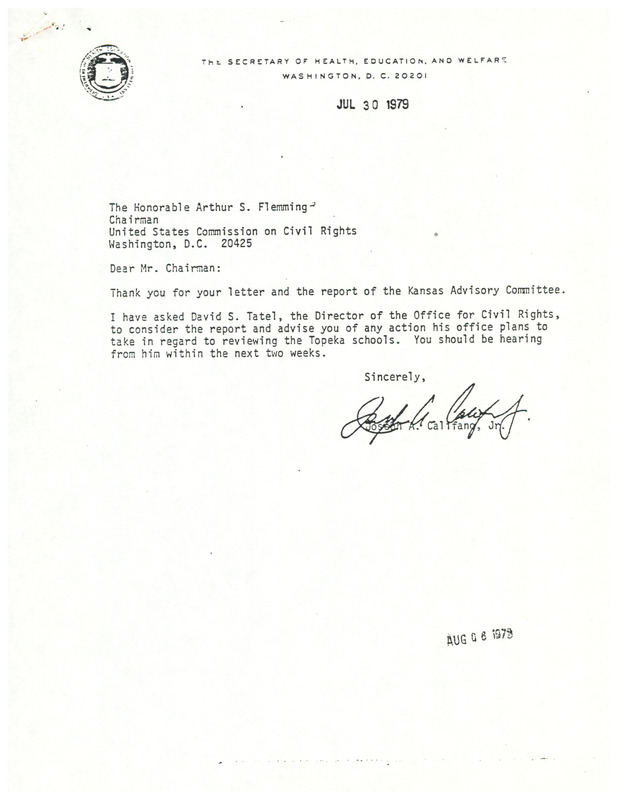
Joseph A. Califano Jr. of the United States Department of Health, Education, and Welfare writes to Chairman of the United States Commission on Civil Rights Arthur S. Flemming to alert him that his office has received his letter and report of the Kansas Advisory Committee and should hear a response within the next two weeks.
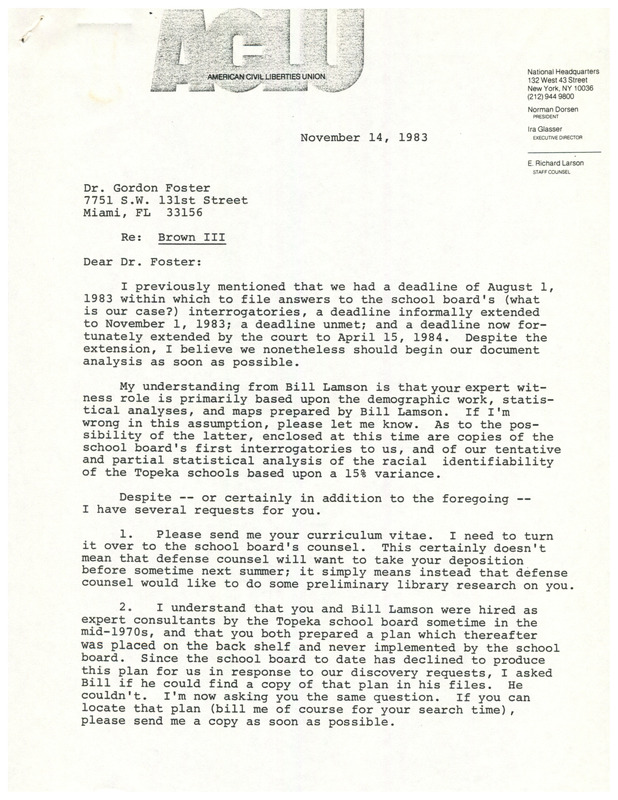
Case Data and Exhibits for Brown III, a relitigation of Brown v. Topeka Board of Education (1954) that corrected resegregation issues caused by open enrollment school choice in 1992. A letter from Richard Larson of the ACLU to Dr. Gordon Foster to inquire about his role as an expert witness in the Brown III case.
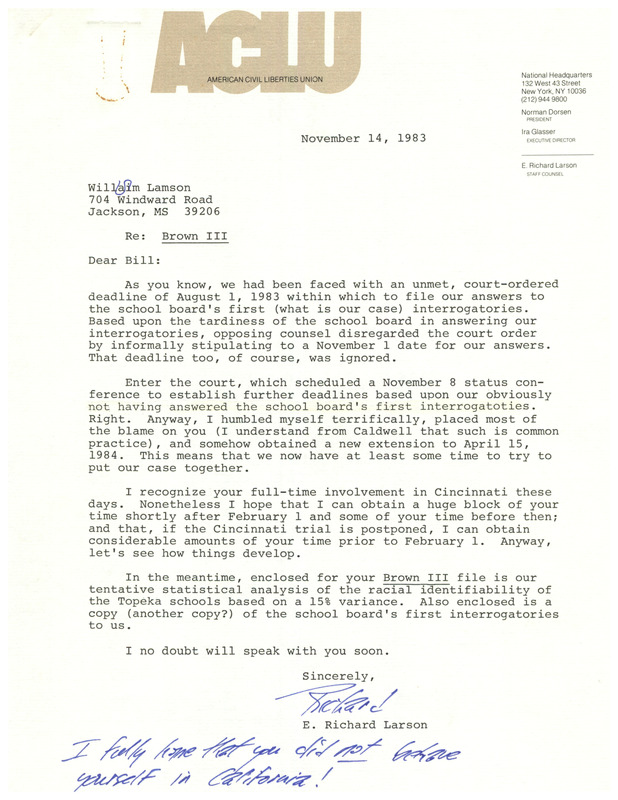
Case Data and Exhibits for Brown III, a relitigation of Brown v. Topeka Board of Education (1954) that corrected resegregation issues caused by open enrollment school choice in 1992. A letter from Richard Larson of the ACLU to William Lamson alerting him that the court has given them an extension to April 15, 1984, to respond to interrogatories.
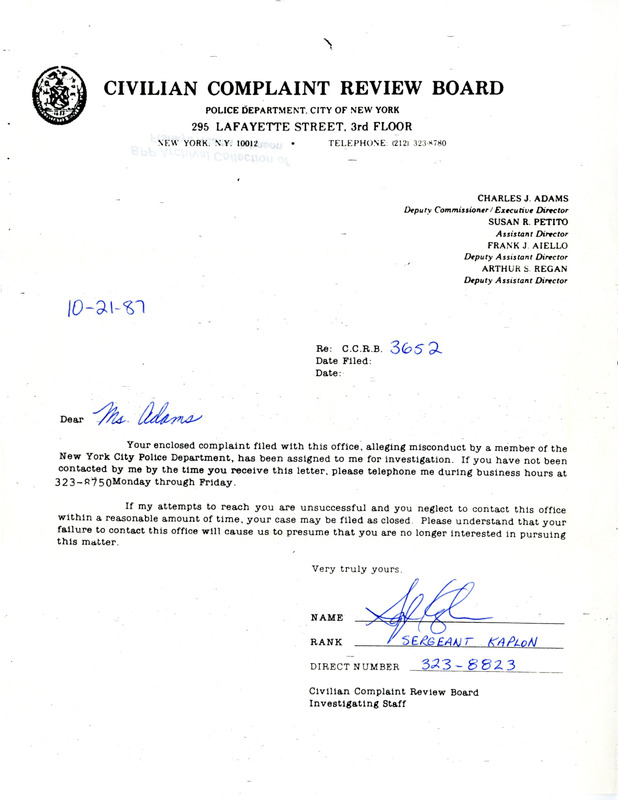
A letter from Sergeant Kaplon of the City of New York Police Department to Frankye Adams-Johnson (Malika) informing her that he will be handling her allegation of misconduct by the police. There is also a copy of the complaint where Frankye Adams-Johnson (Malika) witnessed seeing a police officer assaulting an unknown Black male.
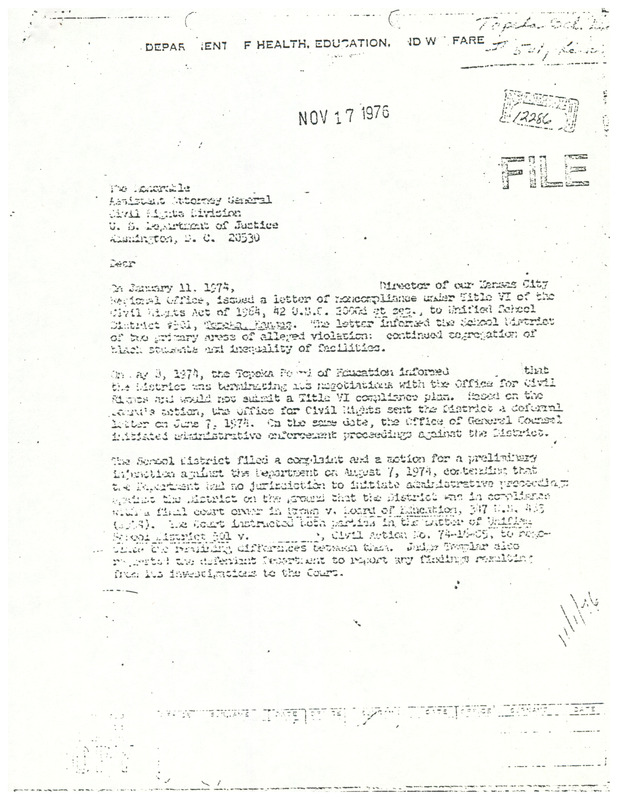
A letter from the Department of Health Education and Welfare (name redacted) to Assistant Attorney General, Civil Rights Division of the U.S. Department of Justice (name redacted) about details involved in the Topeka desegregation case.
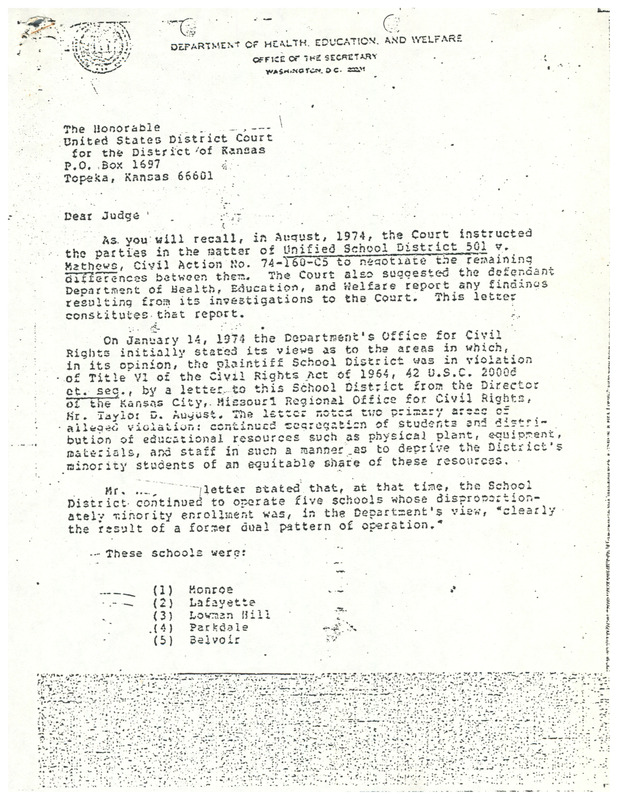
The Director of the Office for Civil Rights in the United States Department of Health, Education, and Welfare (name redacted) writes to U.S. District Court Judge (name redacted) about their concern that the desegregation efforts made by the Topeka School System are not acceptable under the requirements of Title VI in the Civil Rights Act of 1964.
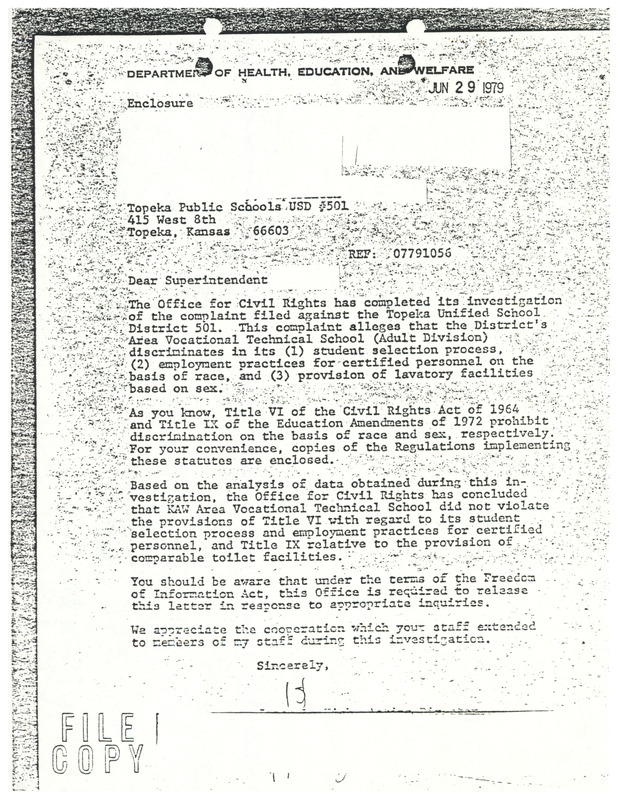
The Office of Civil Rights of the Region VII Department of Health, Education, and Welfare alerts the Topeka Public Schools Superintendent that their analysis shows that the KAW Area Vocational School did not violate the provisions of Title VI of the Civil Rights Act or Title IX of the Education Amendments of 1972. Names have been redacted.